
Formulation
Assess the molecule’s properties, dose requirements, and stability before selecting a delivery format.
We work with pharmaceutical developers and research teams to explore dissolving microneedle delivery. Each project starts with the molecule, dose, and intended use, then brings formulation, design, testing, and development planning together.
Define the question, agree on the evidence, and plan the next stage.
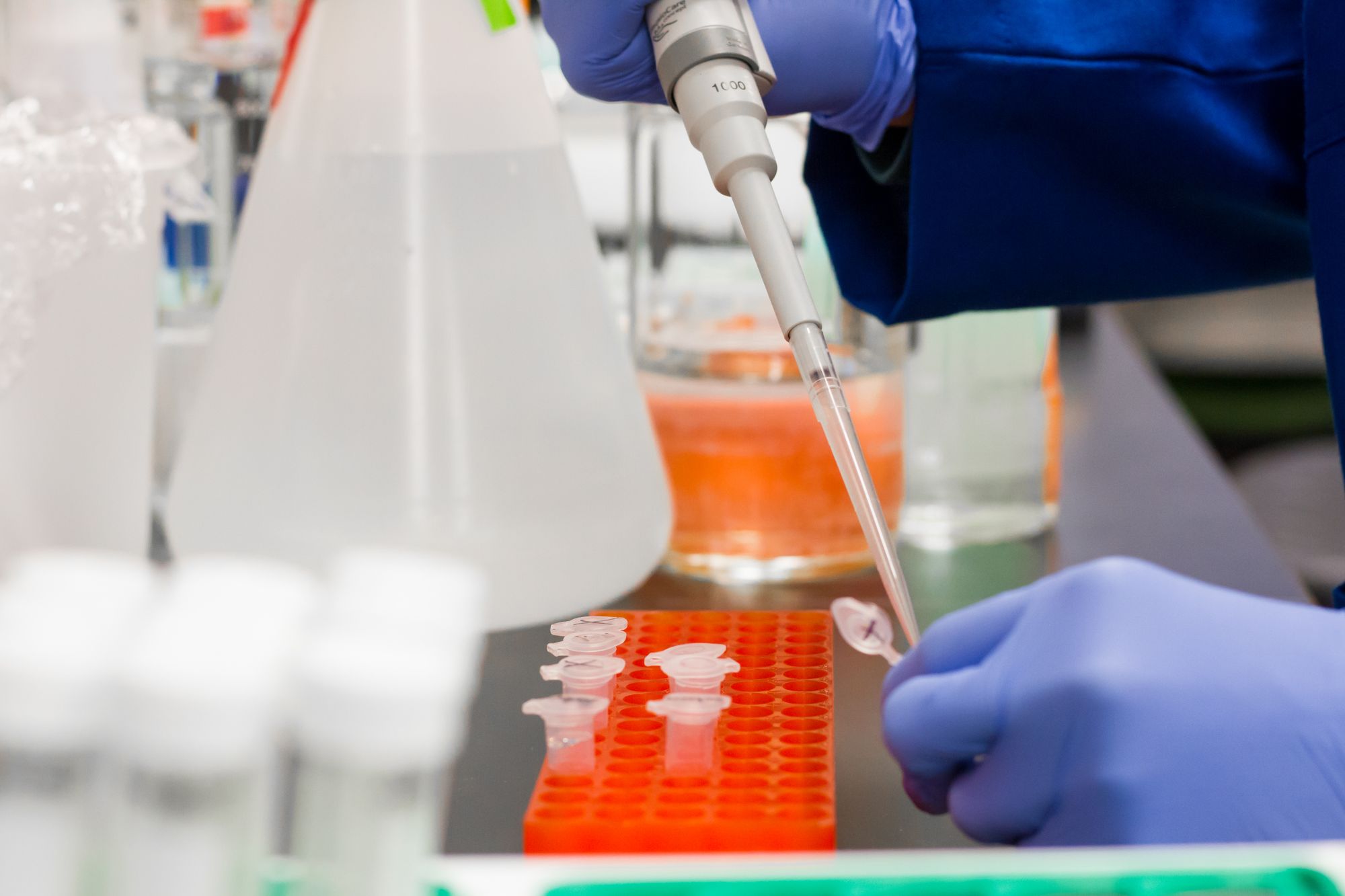
Assess the molecule’s properties, dose requirements, and stability before selecting a delivery format.
Develop the matrix, needle geometry, payload location, and application method together. Loaded content and delivered dose must be measured separately.
Define methods and criteria for integrity, release, insertion, activity, and stability.
Identify the resources and responsibilities for process transfer, quality planning, clinical supply, and regulatory work.
Evaluate solubility, stability, local exposure, and the intended treatment setting.
Study activity retention, loading, and release against the required dose and available array capacity.
Explore antigen stability, delivery formats, immune-response testing, and downstream development needs.
Research goals and responsibilities are agreed for each project.
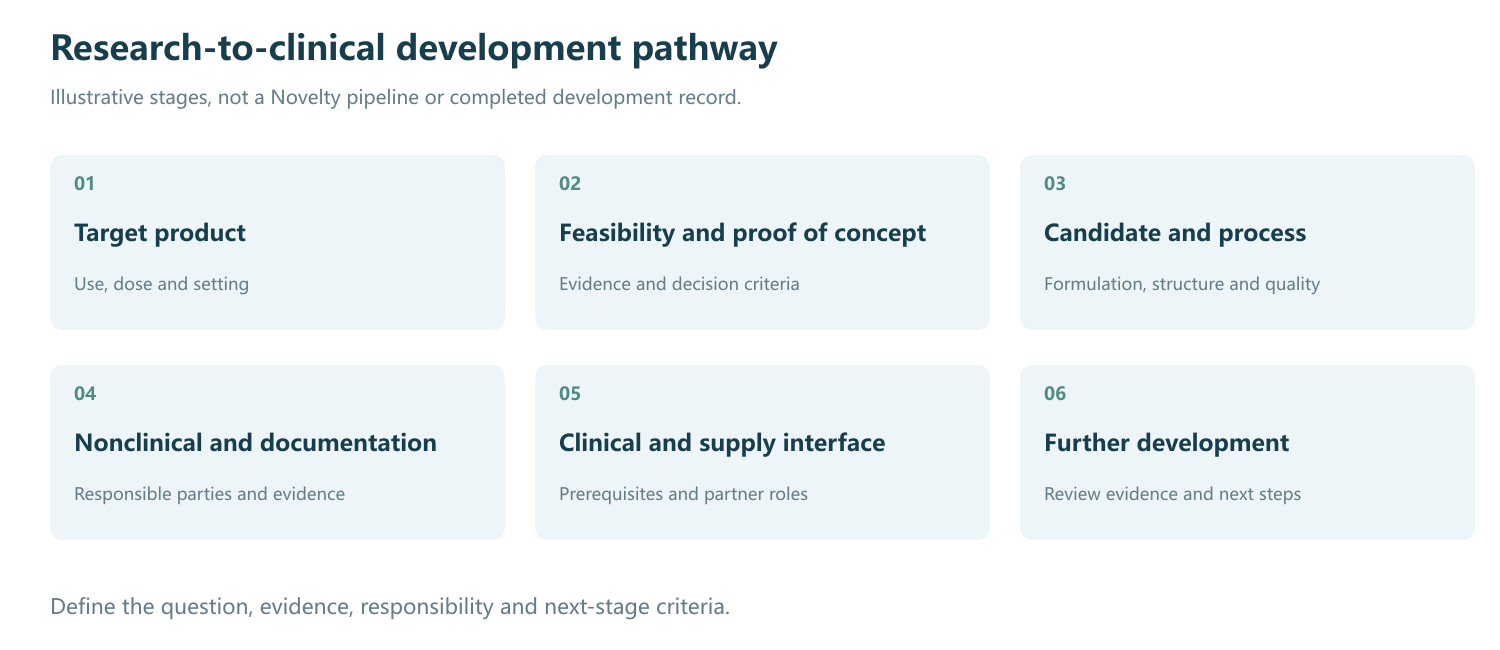
Agree on the intended use, population, dose, reference route, and treatment setting.
Set the study scope, materials, and criteria for a go/no-go decision.
Refine the array, analytical methods, packaging, and quality attributes.
Assign responsibility for pharmacology, exposure, safety, and quality data.
Confirm prerequisites and coordinate the sponsor, study sites, and supply partners.
Use the evidence to guide optimization, transfer, or further development.
This framework describes a potential development path. It does not indicate the status of any Novelty drug program.
Before a study begins, partners need to agree on the candidate, research question, application method, sample quality, and supporting data.
Early clinical studies may evaluate safety, tolerability, drug exposure, or immune response. Later studies address the intended population and dosing regimen. Study design depends on the product and the question being asked.
We welcome discussions with developers, research institutions, and qualified partners to define the evidence needed and each party’s role. Project details will be shared when confirmed and cleared for disclosure.
Answer a defined research question and use the findings to guide the next decision.
Share objectives, work packages, milestones, materials, and project responsibilities.
Address a specific formulation, design, or testing need with agreed deliverables.
Plan process documentation, transfer activities, and coordination with qualified manufacturing partners.
Discuss rights and longer-term arrangements once the technology and intellectual property are defined.
The scope of each partnership is agreed before work begins.
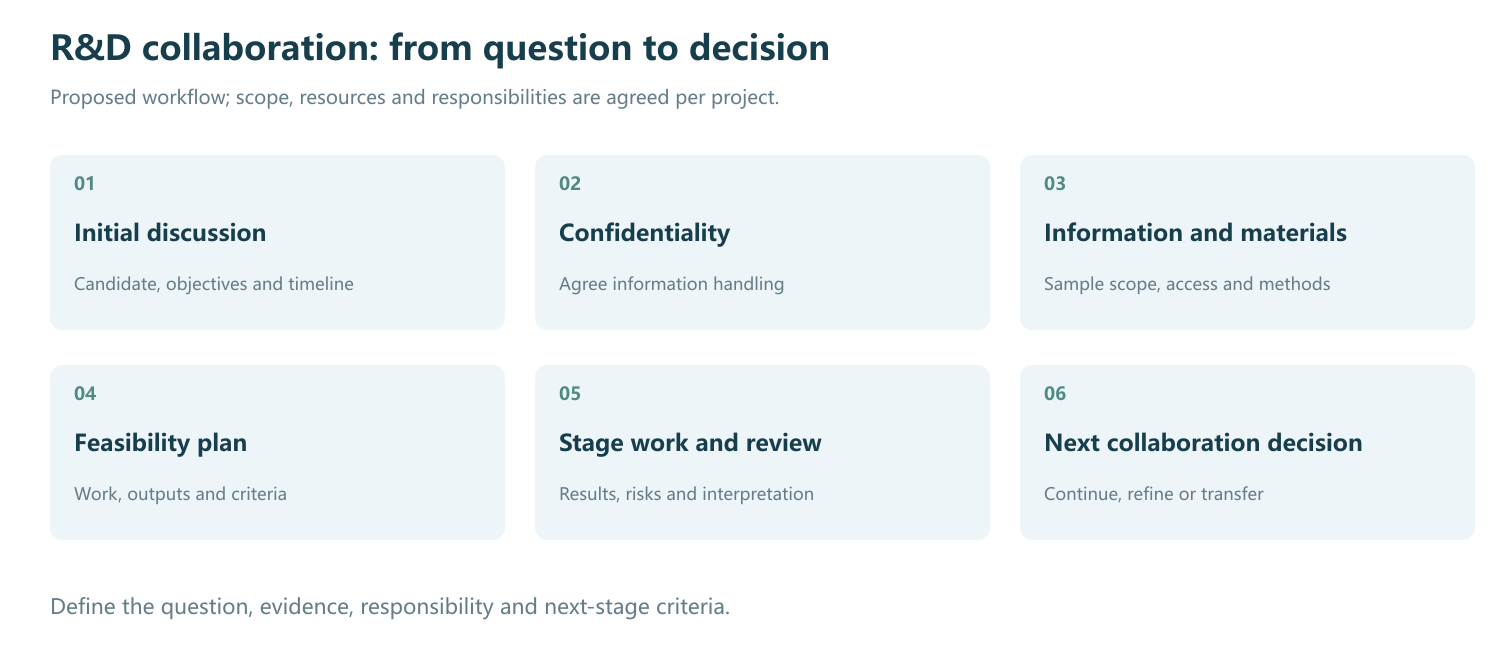
Start with the candidate, intended use, dose range, preferred format, available materials, and timeline. Confidential information and samples are shared under agreed terms.
Each stage has a clear question, deliverables, responsibilities, and decision criteria.
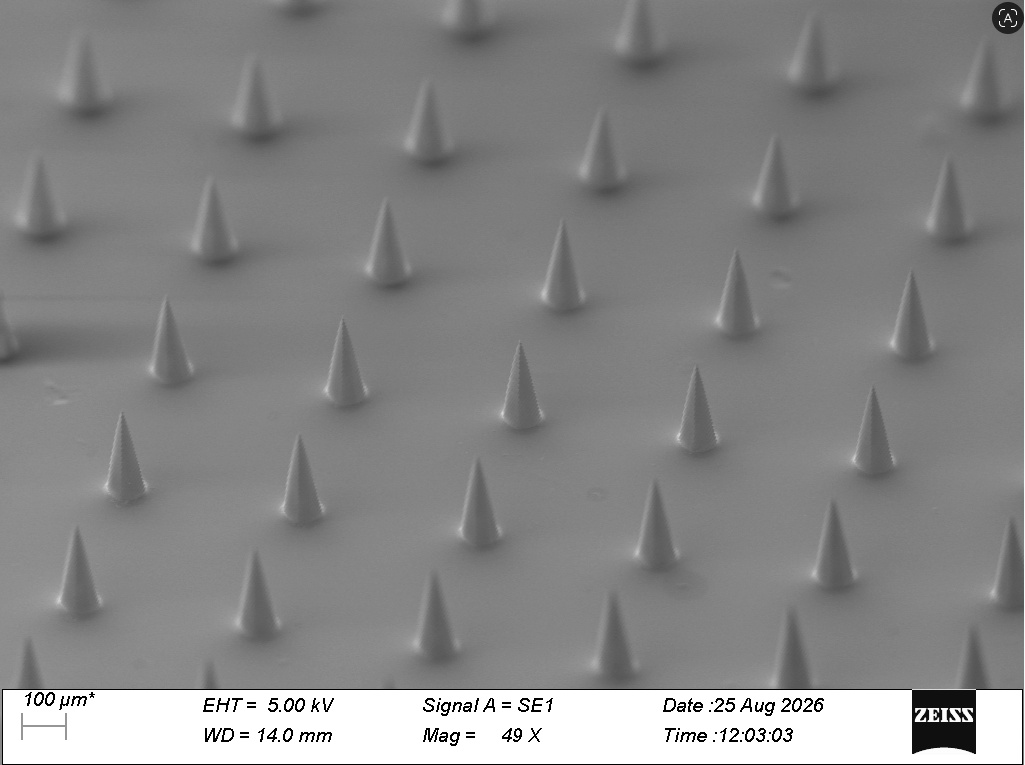

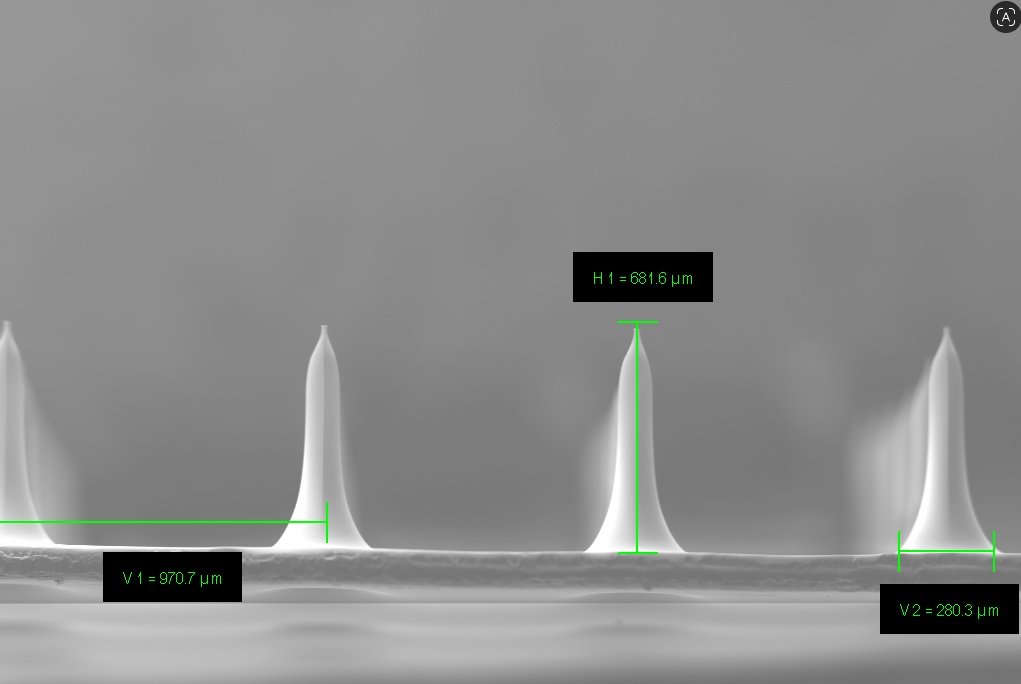
Our SEM images document array and needle structure. Delivery, drug loading, safety, and clinical performance require separate studies.
Nantong supports our existing operations. The Yangzhou facility is being fitted out, with completion planned for late 2026 and production planned for Q1 2027. Construction progress does not establish pharmaceutical manufacturing authorization.
The nonclinical, clinical, and manufacturing resources required for each project are confirmed during planning.
What are you developing, what delivery problem needs to be solved, and what evidence do you need next?